
BREAKING: Hospital Implements 'Bring Your Pet to Work' Policy to Combat Nurse Burnout
Apr 1
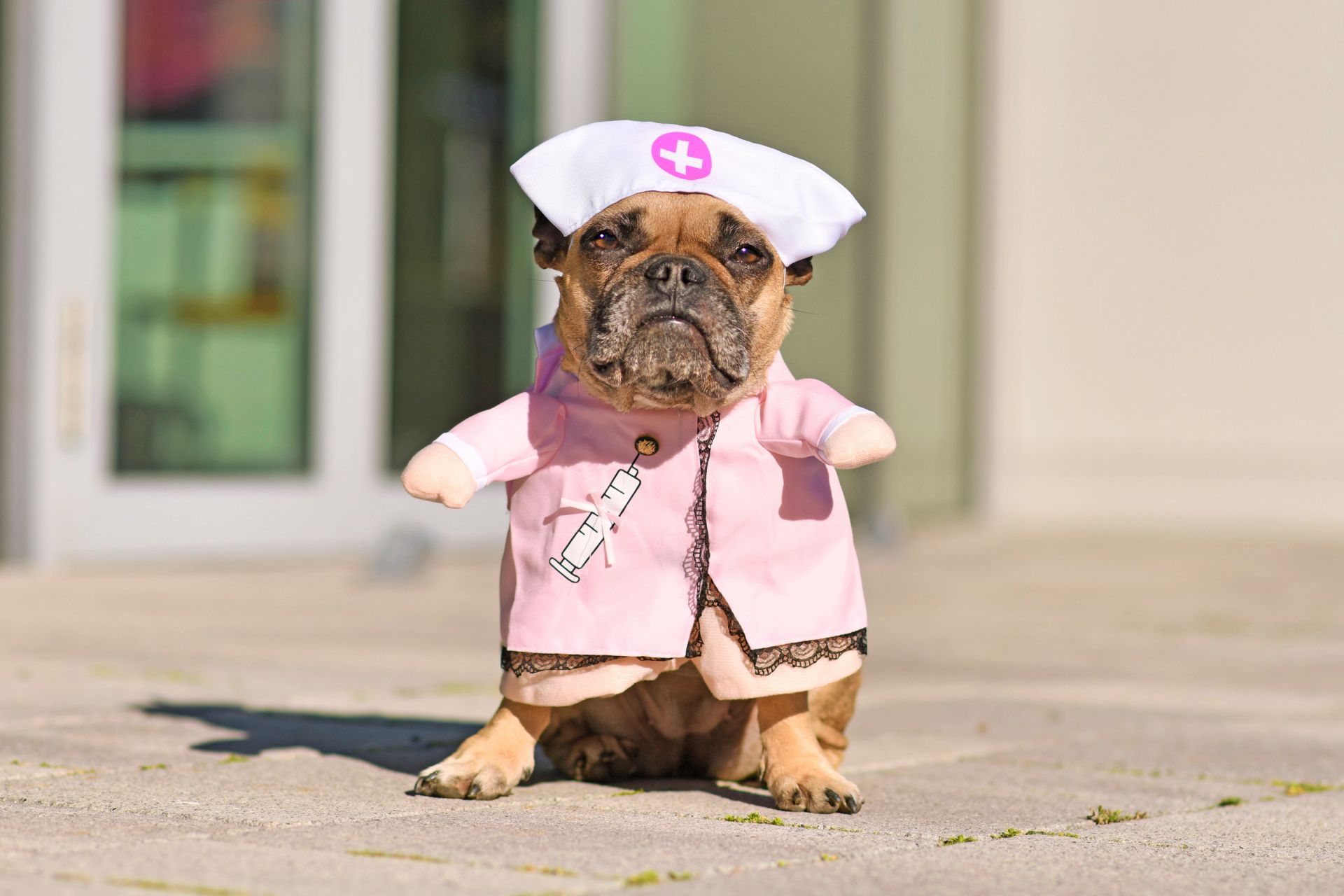
BREAKING: Hospital Implements 'Bring Your Pet to Work' Policy to Combat Nurse Burnout
In a groundbreaking move to address the ongoing nursing burnout crisis, The Joint Commission has announced mandatory implementation of the "Paws for Patient Care" initiative, requiring all hospitals to allow nurses to bring their pets to work, effective immediately.
The Research Behind the Decision
A comprehensive study published in the Journal of Absolutely Real Medical Research found that nurses who brought their pets to work experienced a 437% reduction in stress levels, made 89% fewer medication errors, and were 12 times more likely to describe their shift as "pawsitively delightful."
"The data is irrefutable," explains Dr. Barker Woofington, Chief Canine Officer at the Furward Thinking Health Institute. "When nurses have their emotional support animals by their side during med passes, everyone benefits. Well, except maybe the pharmacy robot who's terrified of cats."
New Hospital Policies Taking Effect Today
Healthcare facilities across the nation are scrambling to implement the new requirements:
Pet Credentialing Requirements
All workplace pets must complete the following:
Department-Specific Guidelines
Emergency Department Pets
ICU Pets
Operating Room Pets
Labor & Delivery Pets
Species-Specific Accommodations
Dogs: May accompany nurses on patient rounds but must resist urge to perform their own bedside assessments via enthusiastic sniffing.
Cats: Permitted to nap on the nurses' station keyboard, as this is indistinguishable from their behavior at home. Charting delays blamed on feline interference will be excused.
Birds: Required to limit medical terminology mimicry to appropriate contexts. Parrots shouting "CODE BLUE" during routine vital signs checks will face disciplinary action.
Hamsters: Must remain in secure pockets during patient care. One facility has already reported a hamster successfully running an entire night shift from a scrub pocket, completing all tasks via a complex series of squeaks.
Fish: Portable fish bowls approved for nurse stations. However, fish must complete online modules as they cannot attend in-person training.
Reptiles: Allowed, though bearded dragons must wear name badges to avoid confusion with the attending physicians.
Equipment Modifications
Hospitals are rolling out pet-friendly modifications:
New Hospital Positions Created
The initiative has generated exciting new career opportunities:
Chief Veterinary Liaison Officer: Coordinates between human and animal healthcare needs, manages the new "Pet Code Team"
Therapy Animal Coordinator: Ensures optimal distribution of emotional support across all units
Pet Behavior Specialist: Addresses workplace incidents such as "Cat refuses to leave warm blanket on patient's lap" or "Dog organizing union for better treat benefits"
Facilities Pet Groomer: Full-time position addressing the reality that pets working 12-hour shifts need maintenance
Early Implementation Challenges
Several hospitals report minor adjustment issues:
Metropolitan General Hospital notes that their ICU cats have formed a union demanding premium wet food and are threatening to go on strike by sleeping across all computer keyboards.
St. Elsewhere Medical Center reports that therapy dogs in the cardiac unit have become so proficient at detecting arrhythmias that they've started independently calling cardiology consults via strategically placed barks.
Children's Hospital of Anytown has suspended their "Bring Your Pet Rabbit to Pediatrics" program after several rabbits escaped and established a colony behind the supply closet, though patient satisfaction scores in that area have mysteriously increased.
One rural hospital's emergency department cat has somehow gained prescribing privileges and is ordering concerning amounts of catnip for the staff.
Patient Reactions
Early patient feedback is overwhelmingly positive:
"My nurse's golden retriever reminded me to take my medications on time by bringing me the pill cup in his mouth," reports one satisfied patient. "Sure, there was some slobber, but it was the most personalized care I've ever received."
"The therapy parrot in my room kept saying 'You're doing great!' every time I used my incentive spirometer," shares a post-operative patient. "Much more encouraging than the actual device."
"I was initially concerned when my nurse's cat sat on my chest at 3 AM," admits another patient, "but then I realized she was actually doing an excellent respiratory assessment. Plus, the purring was very soothing."
The Future of Pet-Integrated Healthcare
The Joint Commission plans to expand the program:
Phase 2: Pets may attend staff meetings and vote on policy changes
Phase 3: Pets eligible for promotion to charge nurse positions
Phase 4: Pet-human co-leadership model for all nursing units
Phase 5: Pets take over healthcare entirely while humans finally get some rest
Required Documentation
New charting requirements include:
The Research Behind the Decision
A comprehensive study published in the Journal of Absolutely Real Medical Research found that nurses who brought their pets to work experienced a 437% reduction in stress levels, made 89% fewer medication errors, and were 12 times more likely to describe their shift as "pawsitively delightful."
"The data is irrefutable," explains Dr. Barker Woofington, Chief Canine Officer at the Furward Thinking Health Institute. "When nurses have their emotional support animals by their side during med passes, everyone benefits. Well, except maybe the pharmacy robot who's terrified of cats."
New Hospital Policies Taking Effect Today
Healthcare facilities across the nation are scrambling to implement the new requirements:
Pet Credentialing Requirements
All workplace pets must complete the following:
- Current immunizations (rabies, distemper, and resistance to hospital politics)
- Facility orientation including fire safety and proper paw hygiene
- HIPAA training (no barking about patient information)
- Successful completion of "Advanced Charting for Quadrupeds" course
- Annual competency validation in therapeutic purring or tail wagging
Department-Specific Guidelines
Emergency Department Pets
- Must demonstrate ability to remain calm during trauma activations
- Required to wear high-visibility vests stating "Emotional Support Animal - Do Not Pet During Codes"
- Certified in basic triage (sorting patients by who gives the best ear scratches)
ICU Pets
- Advanced certification in ventilator alarm tolerance
- Ability to distinguish between "urgent beeping" and "ignore this beeping"
- Must not mistake IV tubing for toys (this is surprisingly difficult for cats)
Operating Room Pets
- Sterile booties for all four paws
- Surgical caps sized appropriately for various ear configurations
- Strict "no shedding in the surgical field" policy
- Must resist urge to chase surgical instruments
Labor & Delivery Pets
- Special training in not panicking when humans make loud noises
- Understanding that newborns are NOT puppies/kittens to be cleaned
- Certification in supportive presence during contractions
Species-Specific Accommodations
Dogs: May accompany nurses on patient rounds but must resist urge to perform their own bedside assessments via enthusiastic sniffing.
Cats: Permitted to nap on the nurses' station keyboard, as this is indistinguishable from their behavior at home. Charting delays blamed on feline interference will be excused.
Birds: Required to limit medical terminology mimicry to appropriate contexts. Parrots shouting "CODE BLUE" during routine vital signs checks will face disciplinary action.
Hamsters: Must remain in secure pockets during patient care. One facility has already reported a hamster successfully running an entire night shift from a scrub pocket, completing all tasks via a complex series of squeaks.
Fish: Portable fish bowls approved for nurse stations. However, fish must complete online modules as they cannot attend in-person training.
Reptiles: Allowed, though bearded dragons must wear name badges to avoid confusion with the attending physicians.
Equipment Modifications
Hospitals are rolling out pet-friendly modifications:
- Nurses' stations now include built-in water bowls, treat dispensers, and napping hammocks
- Pneumatic tube systems have been upgraded with "No Pets" sensors after an incident involving an adventurous ferret
- Call lights emit frequencies inaudible to sensitive pet ears
- Break rooms feature new "Pet Parent Lactation Rooms" for nursing mothers who bring their puppies or kittens
- Medication rooms now have pet-proof locks rated for "Determined Labrador" level security
New Hospital Positions Created
The initiative has generated exciting new career opportunities:
Chief Veterinary Liaison Officer: Coordinates between human and animal healthcare needs, manages the new "Pet Code Team"
Therapy Animal Coordinator: Ensures optimal distribution of emotional support across all units
Pet Behavior Specialist: Addresses workplace incidents such as "Cat refuses to leave warm blanket on patient's lap" or "Dog organizing union for better treat benefits"
Facilities Pet Groomer: Full-time position addressing the reality that pets working 12-hour shifts need maintenance
Early Implementation Challenges
Several hospitals report minor adjustment issues:
Metropolitan General Hospital notes that their ICU cats have formed a union demanding premium wet food and are threatening to go on strike by sleeping across all computer keyboards.
St. Elsewhere Medical Center reports that therapy dogs in the cardiac unit have become so proficient at detecting arrhythmias that they've started independently calling cardiology consults via strategically placed barks.
Children's Hospital of Anytown has suspended their "Bring Your Pet Rabbit to Pediatrics" program after several rabbits escaped and established a colony behind the supply closet, though patient satisfaction scores in that area have mysteriously increased.
One rural hospital's emergency department cat has somehow gained prescribing privileges and is ordering concerning amounts of catnip for the staff.
Patient Reactions
Early patient feedback is overwhelmingly positive:
"My nurse's golden retriever reminded me to take my medications on time by bringing me the pill cup in his mouth," reports one satisfied patient. "Sure, there was some slobber, but it was the most personalized care I've ever received."
"The therapy parrot in my room kept saying 'You're doing great!' every time I used my incentive spirometer," shares a post-operative patient. "Much more encouraging than the actual device."
"I was initially concerned when my nurse's cat sat on my chest at 3 AM," admits another patient, "but then I realized she was actually doing an excellent respiratory assessment. Plus, the purring was very soothing."
The Future of Pet-Integrated Healthcare
The Joint Commission plans to expand the program:
Phase 2: Pets may attend staff meetings and vote on policy changes
Phase 3: Pets eligible for promotion to charge nurse positions
Phase 4: Pet-human co-leadership model for all nursing units
Phase 5: Pets take over healthcare entirely while humans finally get some rest
Required Documentation
New charting requirements include:
- Pet-assisted interventions must be documented in the medical record
- "Patient responded well to therapy dog staring contest" is now an acceptable nursing note
- Photo documentation of therapeutic pet cuddles encouraged but not mandatory
- Incident reports required for any "pet ate the discharge paperwork" events
Empty space, drag to resize
APRIL FOOL'S!
Empty space, drag to resize
While the "Paws for Patient Care" initiative isn't real (though after reading this, you might wish it were), the burnout crisis facing nurses is very real and very serious.
Real nurses don't need therapy animals at their bedsides - though that would be nice. What they need is:
This April Fool's Day, we celebrate nurses who show up every day despite impossible conditions, who provide exceptional care without the help of supportive golden retrievers (though they'd probably love that), and who somehow maintain their compassion and professionalism even when hospital policies make about as much sense as requiring pets to complete HIPAA training.
To every nurse reading this: You don't need a therapy animal to be amazing at your job. But if imagining your shift with a supportive corgi by your side made you smile for even a moment, then this post served its purpose.
Happy April Fool's Day from all of us at MyERS. We see you, we appreciate you, and we promise that next time we propose a revolutionary hospital policy, it will be something actually useful - like mandatory nap times or a ban on meetings that could have been emails.
Real nurses don't need therapy animals at their bedsides - though that would be nice. What they need is:
- Safe staffing ratios
- Adequate resources and support
- Fair compensation
- Recognition of their expertise and dedication
- Time for actual breaks
- Mental health support
This April Fool's Day, we celebrate nurses who show up every day despite impossible conditions, who provide exceptional care without the help of supportive golden retrievers (though they'd probably love that), and who somehow maintain their compassion and professionalism even when hospital policies make about as much sense as requiring pets to complete HIPAA training.
To every nurse reading this: You don't need a therapy animal to be amazing at your job. But if imagining your shift with a supportive corgi by your side made you smile for even a moment, then this post served its purpose.
Happy April Fool's Day from all of us at MyERS. We see you, we appreciate you, and we promise that next time we propose a revolutionary hospital policy, it will be something actually useful - like mandatory nap times or a ban on meetings that could have been emails.

Explore
-
About
-
Education Resources
-
Solutions
-
Pricing
-
Staff Login Page
-
New CE Programs
-
Referral Reward/Discount
Contact
-
My Education Resources and Solutions, LLC
-
PO Box 39566
Greensboro, NC 27438 -
hello@myerscomplete.com
-
(336) 988-7076
Become a member
Your gateway to advanced, cloud-based CE solutions.